European flags
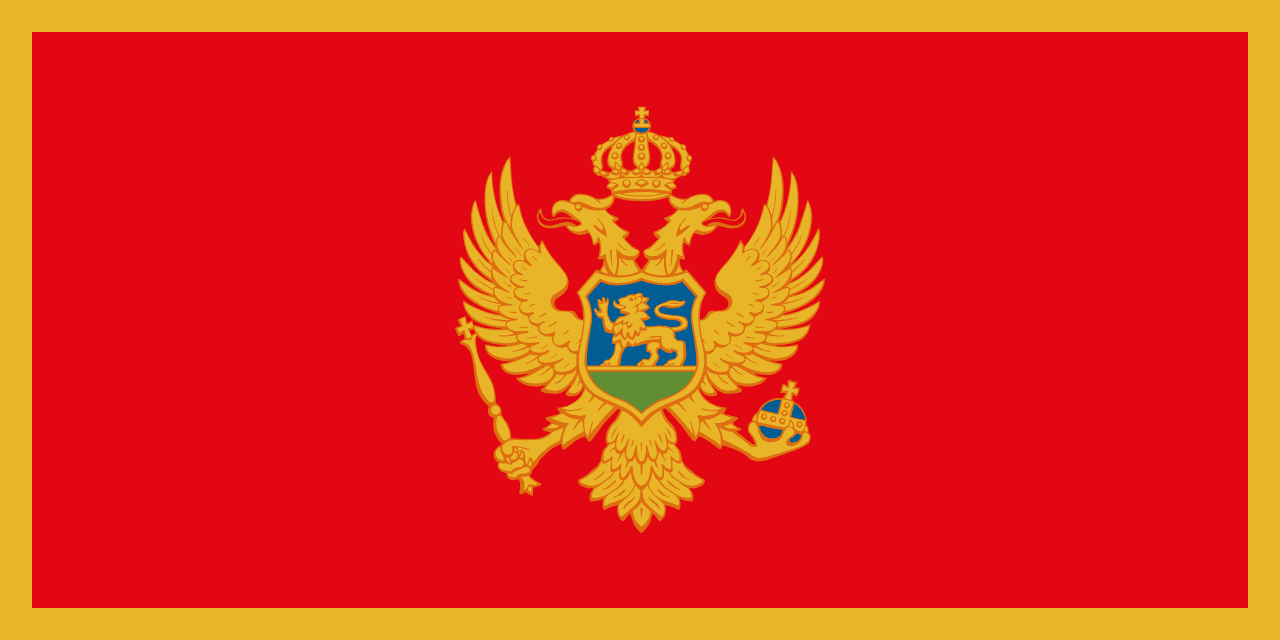
Flag of Montenegro
The flag of Montenegro is the official national symbol of Montenegro, whose capital is Podgorica. On this page you can view and download a high-quality image of the Montenegro flag, copy the Montenegro flag emoji, and learn key facts about this sovereign country in Europe.
Country information
| Independent | Yes |
|---|---|
| Country codes | ME, MNE (ISO 3166-1) |
| Official name | Montenegro |
| Capital city | Podgorica |
| Continent | Europe |
| Member of | United Nations, North Atlantic Treaty Organization |
| Population | 631,219 |
| Total area | 13,812 km² |
| Languages | Montenegrin |
| Currency | Euro (€, EUR) |
| Calling code | +382 |
| Internet TLD | .me |
About the flag of Montenegro
The Montenegro flag represents the identity, history and values of its people — the Montenegrin people. It is flown on government buildings, at international events and during national celebrations, and it appears at the United Nations, sporting tournaments and diplomatic missions around the world.
Montenegro is a sovereign country located in Southeast Europe, covering an area of 13,812 km² with a population of roughly 631,219. The main language is Montenegrin.
Design, meaning and history of the Montenegro flag
Design
The flag of Montenegro features a red field bordered by a narrow golden-yellow fringe or band on all four sides. At the center rests the national coat of arms: a crowned golden double-headed eagle displayed with wings outspread. The eagle holds a golden scepter in its dexter claw and a blue and gold globus cruciger in its sinister claw, bearing a chest shield with a golden passant lion on a green base against a blue sky.
Meaning of the colours and symbols
The red field and golden double-headed eagle derive from the royal heraldry of the historic Petrović-Njegoš dynasty. The double-headed eagle symbolizes the unity of church and state, inherited through Byzantine traditions. The lion passant on the escutcheon is an ancient symbol of episcopal authority originating from the Venetian Lion of Saint Mark.
History
Historically, Montenegro used various war banners featuring crosses and double-headed eagles against red fields, notably the royal standard of King Nikola I. During the era of socialist Yugoslavia, Montenegro was assigned a red, blue, and white horizontal tricolour with a red star, which remained in modified form until 2004. The Parliament of Montenegro adopted the current historic royal-inspired flag on July 13, 2004, prior to restoring full independence in 2006.
- Adopted: July 13, 2004
- Proportions: 1:2
Interesting facts
- Montenegro's flag is bordered on all four sides by a golden border that measures 1/20th the width of the flag.
- The flag design was directly inspired by the royal banner used during the reign of King Nikola I in the late 19th and early 20th centuries.
- It was adopted on July 13 to commemorate both the 1878 Congress of Berlin recognition of independence and the 1941 anti-fascist uprising.
Map of Montenegro
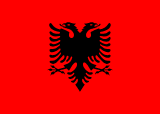
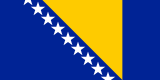
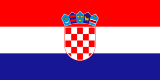
Flags of countries bordering Montenegro
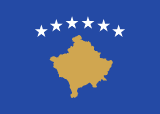
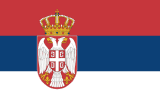
More European flags


Montenegro flag — frequently asked questions
Why does the Montenegrin flag have a gold border?
The gold border is an integral part of the flag's official design, derived from the golden fringing historically used on Montenegrin military standards.
What was Montenegro's flag while part of Yugoslavia?
It used a pan-Slavic red, blue, and white tricolour with a central red star, which was retained with a lighter shade of blue until 2004.
What animal appears on the breast of the eagle?
The shield on the eagle's chest displays a golden lion passant on a green field under a blue sky.
What is the capital of Montenegro?
The capital city of Montenegro is Podgorica.
What is the Montenegro flag emoji?
The Montenegro flag emoji is 🇲🇪. Visit the emoji page to copy and paste it.
What are the country codes of Montenegro?
The ISO 3166-1 codes for Montenegro are ME and MNE.