European flags
Flag of Norway
The flag of Norway is the official national symbol of Kingdom of Norway, whose capital is Oslo. On this page you can view and download a high-quality image of the Norway flag, copy the Norway flag emoji, and learn key facts about this sovereign country in Europe.

Country information
| Independent | Yes |
|---|---|
| Country codes | NO, NOR (ISO 3166-1) |
| Official name | Kingdom of Norway |
| Capital city | Oslo |
| Continent | Europe |
| Member of | United Nations, North Atlantic Treaty Organization, Nordic Council |
| Population | 5,311,916 |
| Total area | 323,802 km² |
| Languages | Norwegian Nynorsk, Norwegian Bokmål, Sami |
| Currency | Norwegian krone (kr, NOK) |
| Calling code | +47 |
| Internet TLD | .no |
About the flag of Norway
The Norway flag represents the identity, history and values of its people — the Norwegian people. It is flown on government buildings, at international events and during national celebrations, and it appears at the United Nations, sporting tournaments and diplomatic missions around the world.
Norway is a sovereign country located in Northern Europe, covering an area of 323,802 km² with a population of roughly 5,311,916. The main languages are Norwegian Nynorsk, Norwegian Bokmål, Sami.
Design, meaning and history of the Norway flag
Design
The flag of Norway features a red field charged with an indigo-blue Scandinavian cross bordered by a white fimbriation. The vertical arm of the cross is shifted toward the hoist side in the traditional Nordic cross pattern.
Meaning of the colours and symbols
The red, white, and blue colours were deliberately chosen to reflect the colours of liberty and democracy, inspired by the flags of France, the United States, and Great Britain. The palette also unifies the red and white of Denmark with the blue of Sweden, alluding to Norway's historical unions with both neighbours. The cross itself represents the nation's Christian heritage.
History
The flag was designed by Fredrik Meltzer, a member of the Norwegian parliament (Storting), and was approved by the legislature in May 1821. Under the union with Sweden, the flag was subjected to various joint emblems, including the 1844 union mark known as the *sildesalaten* ('herring salad') in the canton. Popular pressure led the Storting to remove the union badge from merchant and civilian flags in 1898, taking effect in 1899. When Norway achieved full independence from Sweden in 1905, this pure version became the undisputed national flag.
- Adopted: July 13, 1821
- Proportions: 8:11
Interesting facts
- The flag is popularly nicknamed the 'mother of all flags' because segments of it can be cropped to form the flags of several other countries.
- During the union with Sweden, the joint canton badge was derisively known as the *sildesalaten* ('herring salad') due to its multi-coloured appearance.
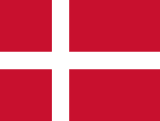
- Designer Fredrik Meltzer drafted the design by sketching an indigo-blue cross inside the existing white cross of the Danish flag.
Map of Norway
Flags of countries bordering Norway
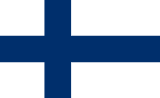
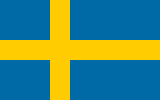
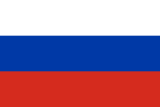
More European flags

Norway flag — frequently asked questions
Who designed the national flag of Norway?
It was designed in 1821 by Fredrik Meltzer, a prominent merchant and member of the Norwegian Storting from Bergen.
What was the 'herring salad' on historical Norwegian flags?
The *sildesalaten* was a canton mark combining the colours of Sweden and Norway, used during their political union between 1844 and 1899.
Why is Norway's flag sometimes called the 'mother of all flags'?
It is a popular trivia concept because visual sections of its pattern contain the flags of Monaco, Poland, Indonesia, the Netherlands, France, and Thailand.
What is the capital of Norway?
The capital city of Norway is Oslo.
What is the Norway flag emoji?
The Norway flag emoji is 🇳🇴. Visit the emoji page to copy and paste it.
What are the country codes of Norway?
The ISO 3166-1 codes for Norway are NO and NOR.