European flags
Flag of Switzerland
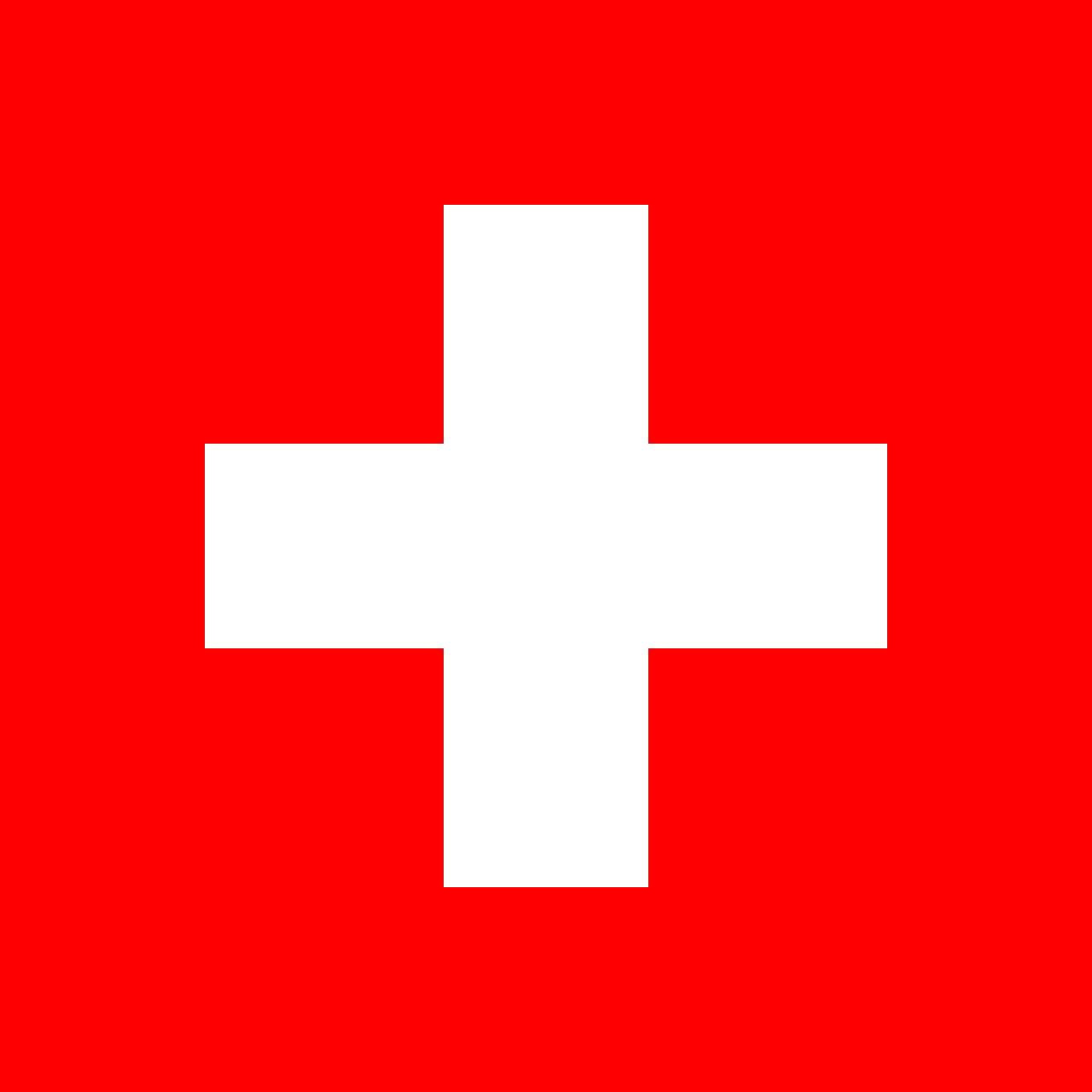
The flag of Switzerland is the official national symbol of Swiss Confederation, whose capital is Bern. On this page you can view and download a high-quality image of the Switzerland flag, copy the Switzerland flag emoji, and learn key facts about this sovereign country in Europe.
Country information
| Independent | Yes |
|---|---|
| Country codes | CH, CHE (ISO 3166-1) |
| Official name | Swiss Confederation |
| Capital city | Bern |
| Continent | Europe |
| Member of | United Nations, Organisation internationale de la Francophonie |
| Population | 8,513,227 |
| Total area | 41,284 km² |
| Languages | French, Swiss German, Italian, Romansh |
| Currency | Swiss franc (Fr., CHF) |
| Calling code | +41 |
| Internet TLD | .ch |
About the flag of Switzerland
The Switzerland flag represents the identity, history and values of its people — the Swiss people. It is flown on government buildings, at international events and during national celebrations, and it appears at the United Nations, sporting tournaments and diplomatic missions around the world.
Switzerland is a landlocked sovereign country located in Western Europe, covering an area of 41,284 km² with a population of roughly 8,513,227. The main languages are French, Swiss German, Italian, Romansh.
Design, meaning and history of the Switzerland flag
Design
The flag of Switzerland consists of a bold, equilateral white cross positioned centrally on a solid red field. The four arms of the cross are of equal length and are one-sixth longer than they are wide. Unlike most national flags, the Swiss national flag is strictly square.
Meaning of the colours and symbols
The white cross originates as a Christian emblem worn as a field sign by Swiss confederates in battle during the Middle Ages. Red and white also correspond to the historic heraldic tinctures of the canton of Schwyz and the Holy Roman Empire. In modern times, the cross is widely seen as an emblem of Swiss independence, neutrality, and freedom.
History
Swiss soldiers first used white cloth crosses attached to their armor during the Battle of Laupen in 1339. The cantons adopted common military banners featuring the cross in the 15th and 16th centuries. The square white cross on a red field was officially adopted as the federal military flag in 1840, followed by constitutional adoption as the national flag in 1848 and precise statutory regulation in 1889.
- Adopted: December 12, 1889
- Proportions: 1:1
Interesting facts
- Switzerland and Vatican City are the only two sovereign states with square national flags.
- The emblem of the International Committee of the Red Cross was created in 1863 by inverting the Swiss flag colors to honor Switzerland.
- Swiss merchant and maritime vessels fly a rectangular civil ensign with a 2:3 ratio instead of the square national flag.
Map of Switzerland
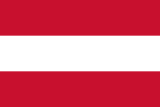
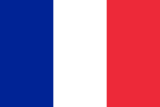
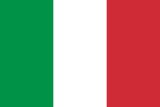
Flags of countries bordering Switzerland

More European flags


Switzerland flag — frequently asked questions
Is the Swiss flag always square?
On land, the Swiss flag is always square, but Swiss merchant and maritime vessels fly a rectangular version with a 2:3 ratio.
What is the connection between the Swiss flag and the Red Cross?
The International Red Cross adopted its emblem in 1863 as an inverted Swiss flag (a red cross on a white background) to honor its founder Henry Dunant and Switzerland.
What are the exact proportions of the white cross on the Swiss flag?
According to Swiss federal law, the arms of the cross are identical in length, and each arm is one-sixth longer than it is wide.
What is the capital of Switzerland?
The capital city of Switzerland is Bern.
What is the Switzerland flag emoji?
The Switzerland flag emoji is 🇨🇭. Visit the emoji page to copy and paste it.
What are the country codes of Switzerland?
The ISO 3166-1 codes for Switzerland are CH and CHE.